Parenting and Prevention
Creating Forever Homes With Chosen Families–Celebrate National Adoption Month
National Adoption Month is observed every November to celebrate and support adoption, focusing on the children and youth in foster care who need permanent homes. The event, which grew from a 1976 “Adoption Week,” was expanded to a full month by President Bill Clinton in 1995. Activities during the month include raising awareness about adoption, educating the public, and celebrating adoptive families and professionals.
Key aspects of National Adoption Month
- Celebration: The month recognizes the love and commitment of adoptive families and the professionals who support them.
- Focus on youth: A significant focus is placed on finding permanent homes for older children and teens in foster care, who often wait longer for adoption.
- Education and awareness: The month provides an opportunity to educate the public about the adoption process and to highlight the needs of children in foster care.
- Support: It encourages people to find ways to help, such as mentoring, becoming a Court Appointed Special Advocate (CASA), GAL (Guardian Ad Litem), or sharing their own adoption stories.
How it started
- 1976: Massachusetts Governor Michael Dukakis announced the first “Adoption Week”.
- 1984: President Ronald Reagan proclaimed the first National Adoption Week.
- 1995: President Clinton expanded the observance to National Adoption Month, celebrated throughout November.
National Adoption Day was started in 2000 by a coalition of national partners, which included the Alliance for Children’s Rights, Children’s Action Network, Freddie Mac Foundation and Dave Thomas Foundation for Adoption as well as children’s rights lawyer and former foster child Andrew Bridge.
In November 2000, National Adoption Day sponsors worked with law firms, state foster care agencies, child advocates, and courts to complete hundreds of foster care adoptions in nine jurisdictions nationwide. In November 2001, 17 jurisdictions participated in National Adoption Day. In 2002, Casey Family Services and the Congressional Coalition on Adoption Institute joined the National Adoption Day Coalition, helping 34 cities across the country finalize 1,350 adoptions and celebrate adoption.
By 2003, courts and community organizations in more than 120 jurisdictions coast to coast finalized the adoptions of 3,100 children and celebrated adoption. In 2004, courts and community organizations finalized the adoptions of more than 3,400 children from foster care in 200 events in 37 states.
In 2011, National Adoption Day was celebrated across the US, the District of Columbia, and Puerto Rico as more than 300 events were held throughout the country to finalize the adoptions of children in foster care, and to celebrate all families who adopt. In total, more than 75,000 children have been adopted from foster care on National Adoption Day. Traditionally, National Adoption Day is celebrated the Saturday before Thanksgiving
What it is
National Adoption Day is an annual event that raises awareness for children in foster care who are waiting for a permanent home.
How it’s celebrated:
Courts hold special, celebratory adoption hearings to finalize adoptions. Events like rallies and seminars are also held to support the cause.
Who it involves
It involves the efforts of policymakers, advocates, and community members to make adoption dreams a reality for children and families.
The adoption triangle
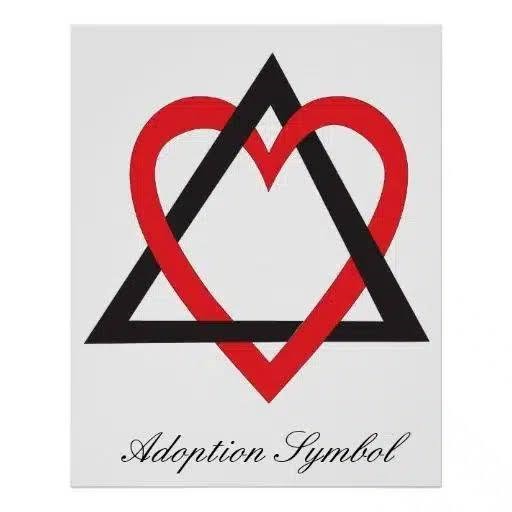
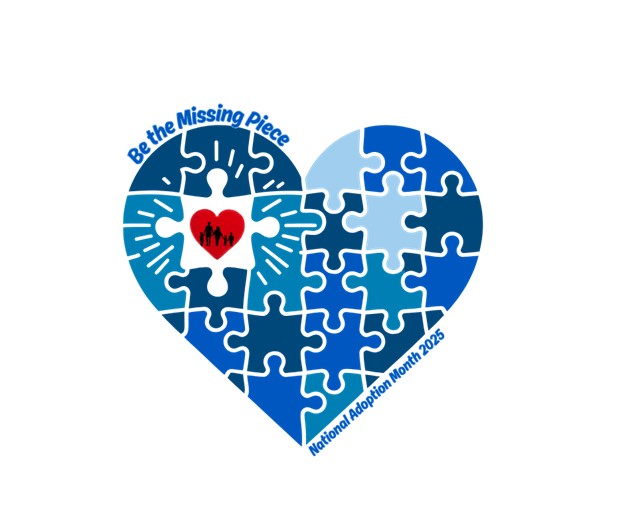
The main adoption symbol is a triangle intertwined with a heart. The three points of the triangle represent the three sides of the adoption triad—the birth family, the adoptive family, and the adoptee—while the heart signifies the love that connects them. Other symbols include the puzzle piece, representing how different pieces come together to form a new family, and the open heart, symbolizing openness and receptiveness in the adoption process.
What it means to adopt
Adoptive families can be formed in many ways. Many people believe that just babies are adopted from agencies and do not realize the widespread differences in the creation of adoptive families. Children are adopted as infants from private agencies, but private adoption agencies also serve older children if they are contacted by a birth parent who wants to make an adoption plan for. Children are adopted by relatives and non-related people who may or may not know the child and their biological family. Foster families adopt children they have cared for an extended period and approved adoptive parents often adopt from foster care, if children are not already living in a permanent home. International adoptions also occur with countries outside of the United States with places such as Romania, South Korea and South American countries. Not all countries participate in allowing international adoptions.
Adoption is a joyous and special way to create a family, but this also begins with loss. Many adopted children share core issues that need to be addressed with them by caring and connected parents or through post-adoption services.
- Loss: The separation from a biological family, the loss of a biological child for birth parents, or the loss of biological family for adoptees.
- Rejection: Feelings of being rejected by birth parents, or the fear of being rejected by adoptive parents or other family members.
- Shame/guilt: Feelings of shame or guilt for placing a child for adoption, or the feeling that they did something wrong for being placed for adoption.
- Grief: The natural emotion associated with the loss of the parenting relationship, including the loss of a child for birth parents or the loss of their birth family for adoptees.
- Identity: The struggle to understand one’s origins, including medical history, genetic information, and biological family ties.
- Intimacy: Challenges in forming and maintaining relationships, particularly with fears of rejection or disconnection.
- Mastery/control: Feelings of a lack of control over major life decisions, such as the decision to be placed for adoption or the adoption process itself.
Additional resource: WeAreFamiliesRising.org.
At Parenting Matters, we have a special program called Chosen Families that is specifically designed to provide wrap around services to post adoptive families. We provide trauma-based training and adoption-competent education.
The goal is to use connection and knowledge to assist the families in parenting their adopted children differently and to bring healing to the family. For those considering adoption, if not you, then who? Be the missing piece in a child’s life!
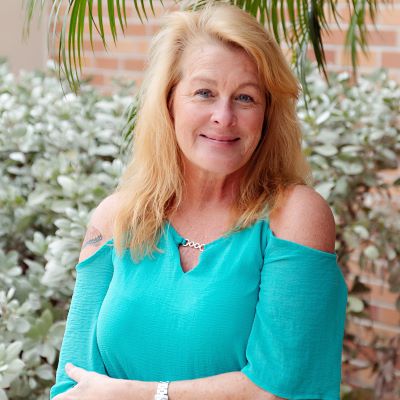
Katrina Stallings is a passionate advocate for children and families, bringing more than 30 years of experience in child welfare, particularly in adoption. Throughout her career, she has served in a variety of roles, including Case Manager, Director of Foster Care Programs, and Professional Trainer. She currently serves as a Parenting Educator for the Chosen Families Program, where she supports and trains post-adoptive families navigating the challenges of parenting children who have experienced trauma.
Katrina is a Certified Child Welfare Professional, Certified Adoption Competent Trainer through Rutgers University School of Social Work, and a Trust-Based Relational Intervention® (TBRI) Practitioner and Educator. She is also a certified trainer for foster and adoptive parents. Her professional focus centers on trauma-informed care—equipping caregivers and professionals with the tools and understanding needed to foster healing, safety, and permanency for every child.
Her dedication and leadership have been recognized with multiple honors, including the Florida Department of Children and Families Value Award and the Congressional Angel in Adoption Award.
Katrina holds a Bachelor of Science in Psychology from Florida State University and a Master of Arts in Counseling from the University of South Florida.
Beyond her professional work, Katrina enjoys horseback riding and exploring the therapeutic benefits of equine-assisted therapy. She also loves the beach, fishing, reading, singing, butterfly gardening, and traveling. A firm believer in equality and integrity, she remains motivated by her lifelong mission: to help children and families heal, grow, and thrive.